
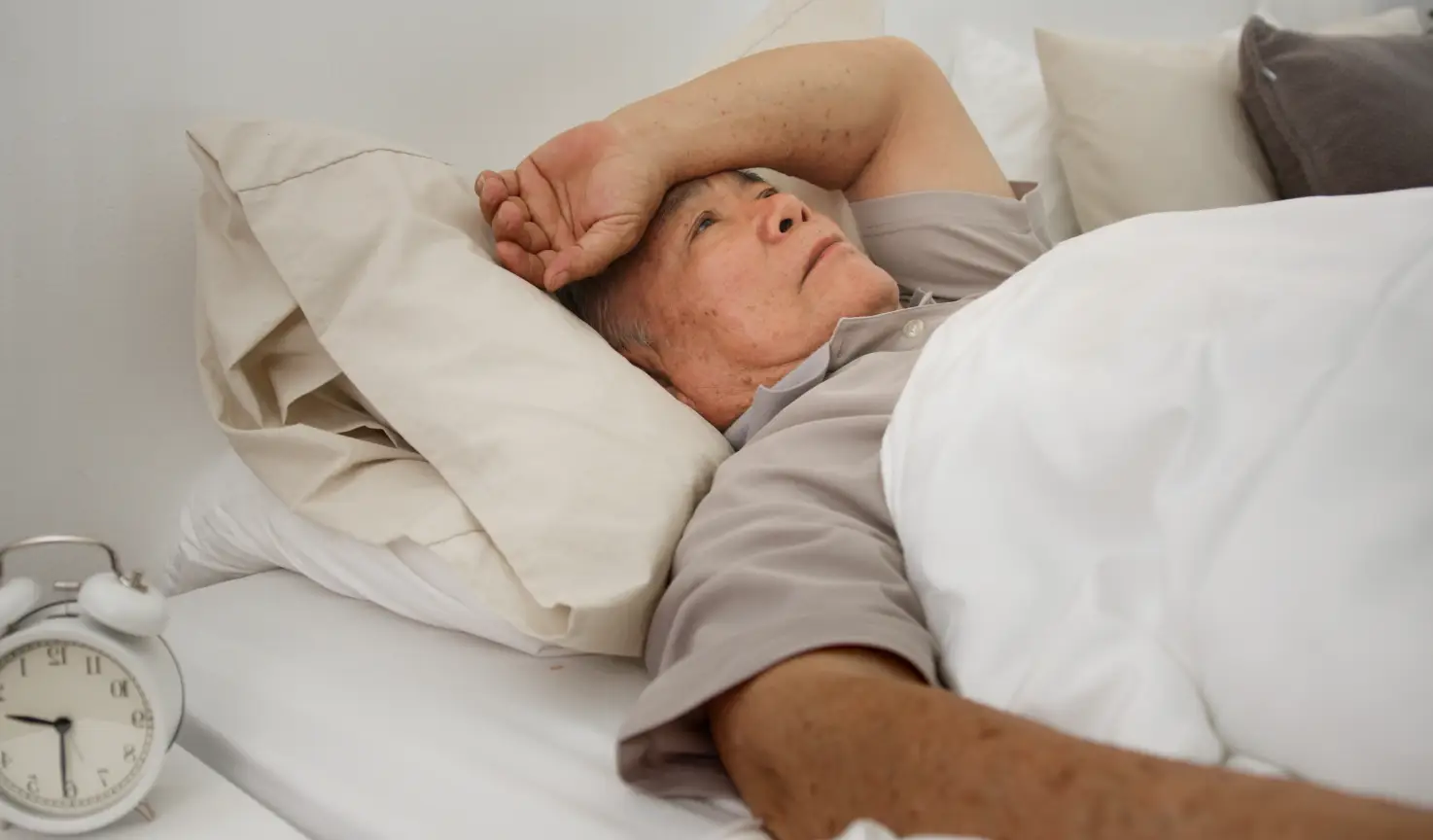
Sleep Apnea: Sleep Problems and Cognitive Decline
What you should know about sleep apnea
About 70 million Americans struggle with sleep problems each year. But not all sleep problems are the same. Sleep apnea is different from regular snoring or insomnia. It can be bad for your health, especially your brain and cognitive function.1
What makes sleep apnea different from snoring?
Unlike ordinary snoring, sleep apnea causes repeated pauses in breathing that can disrupt sleep and reduce oxygen levels throughout the night. Many adults snore sometimes. You might snore when you have a cold or after drinking wine. This is usually harmless.
But sleep apnea is different. With sleep apnea, you actually stop breathing during the night, sometimes hundreds of times. Each time you stop breathing, your brain has to wake you up to start breathing again. You might not remember waking up, but your sleep quality suffers.2
What happens when you have sleep apnea
Sleep apnea happens when the muscles in your throat relax too much during sleep. They block your airway, making it like trying to breathe through a collapsed straw. You stop breathing for 10 seconds or longer. Your oxygen levels drop. Your brain wakes you up just enough to breathe. Then, it happens repeatedly throughout the night.
How common is sleep apnea?
Sleep apnea is more common than most people realize. Most don't even know they have it.3
It becomes more common as we age. About half of adults aged 65 and older have at least mild sleep apnea. Men are affected more often than women, though the gap closes after menopause.
Sleep apnea symptoms
Nighttime symptoms:
Loud snoring
Gasping or choking sounds
Pauses in breathing
Waking up often to use the bathroom
Restless sleep
Daytime symptoms:
Feeling tired even after sleeping
Morning headaches
Trouble concentrating
Mood changes
Falling asleep during the day
Dry mouth when you wake up
Your bed partner may often notice the nighttime symptoms before you do.
Why sleep apnea is serious
Untreated sleep apnea is a serious medical condition that can increase the risk of major health problems beyond daytime fatigue.
Heart and blood pressure problems
Every time you stop breathing, your oxygen levels drop. This stresses your heart and blood vessels. Over time, this can lead to:
Irregular heartbeat
Heart disease
Heart attack
Stroke4
Sleep apnea increases your risk of dementia
Untreated sleep apnea may significantly increase your risk of getting Alzheimer's disease and other types of dementia.5
How sleep apnea harms your brain
When you stop breathing, your brain gets less oxygen. This happens repeatedly, night after night. Your brain needs oxygen to stay healthy. During deep sleep, your brain also clears out waste products, including proteins that build up in Alzheimer's disease. When sleep apnea interrupts this cleaning process, harmful proteins accumulate.6
Recent research from UC Irvine found that low oxygen during sleep may damage the part of your brain that stores memories, the same area affected first by Alzheimer's disease.7
Good news! Studies show that treating sleep apnea can actually reverse some brain damage. People who used a CPAP machine showed improvements in brain structure and cognitive function.8
Getting diagnosed: The sleep study
You can't diagnose sleep apnea on your own. Your doctor needs to order a sleep study. A sleep study measures what happens while you sleep, including breathing patterns, blood oxygen levels, heart rate and brain waves. You can do this test in a sleep lab or at home with portable equipment.
Sleep apnea treatment options
Sleep apnea can often be treated with a range of therapies designed to improve breathing, reduce symptoms and support better sleep quality.
CPAP machine: Most common treatment
CPAP (Continuous Positive Airway Pressure) is the most common treatment. A machine delivers gentle air pressure through a mask you wear while sleeping. This keeps your airway open so you can breathe normally.
Benefits of CPAP:
Reduces risk of death
Improves energy and alertness
Lowers blood pressure
Reduces risk of heart disease and stroke
May reverse brain damage from sleep apnea9
Many people struggle with CPAP at first. If you have trouble, talk to your doctor. They can adjust the mask or try different settings. Don't give up before talking to your doctor.
Other treatment options for sleep apnea:
Here are some of the suggested treatments used by the medical industry today to help with sleep apnea.
Weight loss: Losing some weight can help improve sleep apnea. Lifestyle changes may reduce symptoms.
Oral appliances: A dentist can fit you with a custom mouthpiece that keeps your airway open.
Positional therapy: Some people experience sleep apnea only when sleeping on their backs. Sleeping on your side may help.
Surgery: For some people, surgery to remove tissue or reposition the jaw may help.
Hypoglossal nerve stimulation: A device implanted under your skin stimulates the nerve to your tongue, keeping your airway open. This may work well for people who can't use CPAP.
New medication: In 2024, the FDA approved the first medication for sleep apnea. Zepbound® may help people with obesity and sleep apnea lose weight.10
Simple changes that can help you sleep better
Here are some recommendations for lifestyle changes that may improve your sleep:
Creating a good sleep environment:
Keeping your bedroom cool, dark and quiet.
Using your bedroom only for sleep.
Getting a comfortable mattress and pillows.
Watching what you consume:
Avoiding caffeine after 2 p.m.
Limiting alcohol in the evening as it may disrupt your sleep quality.
Keeping a regular sleep schedule:
Going to bed at the same time every night.
Waking up at the same time every morning.
Following a schedule may help your body's natural clock to set patterns.
Exercising regularly:
Doing physical activity, even just a 30-minute walk.
Exercising earlier in the day, not before bed.
Managing stress:
Trying to do deep breathing or meditate.
Writing down worries before bed.
Talking to a therapist if anxiety affects your sleep.
Track your sleep
Keeping a simple sleep journal may help. Write down:
What time you go to bed and wake up.
How you felt in the morning.
Any caffeine or alcohol you had.
Whether you exercised or not.
This may help you and your doctor identify patterns in your behaviors and the quality of your sleep.
When to call your doctor
Talk to your doctor if you have:
Loud snoring every night.
Someone notices you stop breathing during sleep.
Gasping or choking at night.
Exhaustion during the day despite sleeping.
Headaches in the morning.
Trouble concentrating or remembering.
High blood pressure, heart disease or diabetes.
Finding and treating the problem early may help stop serious issues and protect your brain.
Final thoughts from Dr. T
Sleep apnea is a serious health problem, but it can be treated. It affects millions of people in the United States. It can increase risk of heart disease, stroke, dementia and Alzheimer's disease.
The good news? Treatment may work. CPAP, weight loss, oral appliances or newer treatments may improve your health and protect your brain.
If you think you have sleep apnea, don't wait. Talk to your doctor about getting a sleep study. Taking action now may help you stay in good health and be sharper as you age.

About the Author
Dr. Grant Tarbox is a HealthSpring Clinical Expert and Senior Executive Medical Director with more than 25 years of American Family Medicine Board Certification.
Share this article:
References
Neurology.org. (2024). Sleep Apnea Symptoms Are Associated with Memory and Cognitive Symptoms in a Nationally-representative Sample of U.S. Adults (S36.010). https://www.neurology.org/doi/10.1212/WNL.0000000000206493
American Academy of Sleep Medicine. (2021). Is it more than a snore? Recognizing sleep apnea warning signs. https://aasm.org/is-it-more-than-a-snore-recognizing-sleep-apnea-warning-signs/
Yu, K. S., et al. (2025). Unmasking obstructive sleep apnea: Estimated prevalence and impact in the United States. Respiratory Medicine, 233, 107870. https://pubmed.ncbi.nlm.nih.gov/40957495/
Yeghiazarians, Y., et al. (2021). Obstructive sleep apnea and cardiovascular disease: A scientific statement from the American Heart Association. Circulation, 144(3), e56-e67. https://www.ahajournals.org/doi/10.1161/CIR.0000000000000988
Guay-Gagnon, M., et al. (2022). Sleep apnea and the risk of dementia: A systematic review and meta-analysis. Journal of Sleep Research, 31(5), e13589. https://pubmed.ncbi.nlm.nih.gov/35366021/
Bubu, O. M., et al. (2021). Obstructive sleep apnea, cognition and Alzheimer's disease: A systematic review integrating three decades of multidisciplinary research. Sleep Medicine Reviews, 50, 101250. https://pubmed.ncbi.nlm.nih.gov/31881487/
Berisha, D. E., et al. (2025). Study links REM sleep apnea to brain changes, memory loss in older adults. UC Irvine News. https://news.uci.edu/2025/05/07/study-links-rem-sleep-apnea-to-brain-changes-memory-loss-in-older-adults/
Castronovo, V., et al. (2021). White matter integrity in obstructive sleep apnea before and after treatment. Sleep, 44(4), zsaa185. https://pubmed.ncbi.nlm.nih.gov/25142557/
Pépin, J. L., et al. (2022). Relationship between CPAP termination and all-cause mortality: A French nationwide database analysis. Chest, 161(6), 1657-1665. https://pubmed.ncbi.nlm.nih.gov/35176275/
Malhotra, A., et al. (2024). Tirzepatide for the treatment of obstructive sleep apnea and obesity. New England Journal of Medicine, 391, 1193-1205. https://pubmed.ncbi.nlm.nih.gov/38912654/