
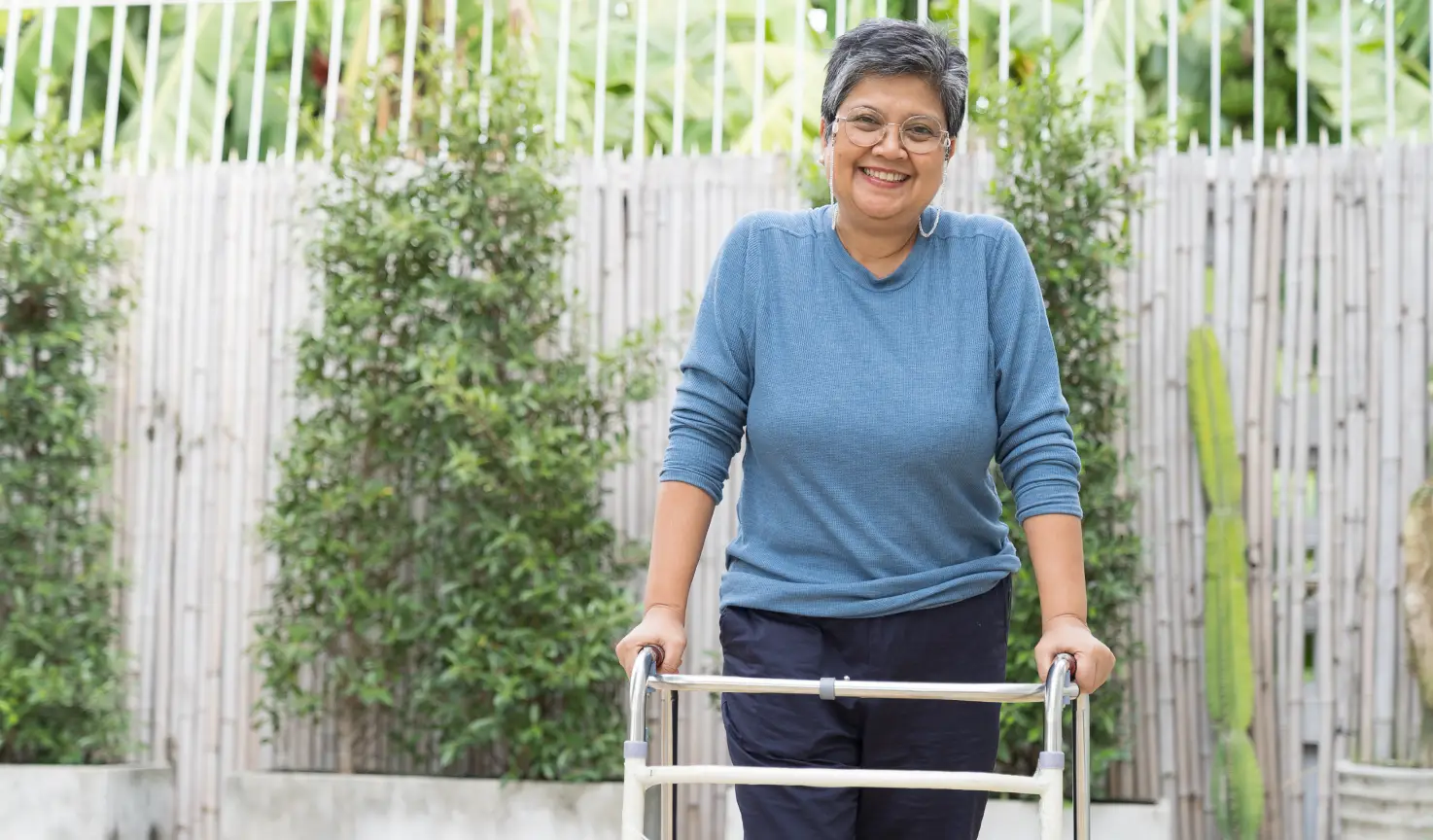
Prevención de caídas en adultos mayores: reducir los riesgos, mejorar el equilibrio
Las caídas son un tema importante para los adultos mayores; pueden causar lesiones, pérdida de independencia y reducción de la calidad de vida. Entender por qué ocurren las caídas y cómo prevenirlas puede reducir notablemente el riesgo y ayudarte a mantener el equilibrio y la confianza.
Por qué ocurren las caídas
Las caídas suelen ocurrir por una combinación de factores, como ciertas condiciones de salud, los medicamentos, los problemas de equilibrio y los peligros en el entorno. Identificar y abordar estos factores es importante para prevenir las caídas.
Tu salud y tu médico
Un proveedor de cuidado de la salud puede evaluar tu riesgo de caídas y ayudarte a crear un plan personalizado para prevenirlas. Es posible que te pregunten sobre caídas anteriores, tu capacidad para caminar, tu estado general de salud y todos los medicamentos que tomas, incluidos los de venta libre.
Medicamentos
Algunos medicamentos, como los sedantes, antidepresivos, medicamentos para la presión arterial y los que ayudan a dormir pueden causar mareos o somnolencia. Revisar tus medicamentos con un médico o farmacéutico puede ayudar a reducir el riesgo de caídas relacionado con medicamentos. Consulta siempre los efectos secundarios cuando comiences a tomar medicamentos nuevos.
Vista y audición
Los cambios en la vista y la audición pueden afectar el equilibrio y la percepción del entorno. Los exámenes periódicos de la vista y el oído, así como el uso constante de audífonos o anteojos recetados, pueden reducir el riesgo de caídas. Si usas anteojos con distintas graduaciones para ver de cerca y de lejos (lentes multifocales), ten cuidado al subir o bajar escaleras, ya que pueden dificultar el cálculo de la distancia entre los escalones.
Mareos al ponerse de pie
Ponerte de pie demasiado rápido puede provocar una disminución repentina de la presión arterial y causar mareos. Mantenerte hidratado, levantarte lentamente y hacer una pausa antes de empezar a caminar puede ayudar a prevenir las caídas relacionadas con los mareos. También puedes probar ejercicios sencillos para las piernas, como cruzarlas o tensar los músculos antes de ponerte de pie.
Debilidad y otras condiciones de salud
La debilidad muscular artritis, diabetes y los problemas de los nervios pueden afectar el equilibrio y la capacidad para caminar. Controlar las condiciones crónicas y mantener la fuerza muscular son pasos importantes para prevenir las caídas.
Cómo ayudar a prevenir las caídas
Estar activo y desarrollar fuerza
con regularidad actividad física ayuda a mejorar la fuerza y el equilibrio. Actividades como caminar, practicar Tai Chi, hacer yoga o realizar ejercicios sencillos de fuerza y equilibrio (como levantarte de una silla sin usar las manos) pueden reducir el riesgo de caídas. Consulta a tu proveedor de cuidado de la salud antes de comenzar una rutina nueva.
Dormir lo suficiente y tener una alimentación equilibrada también contribuyen a la fuerza muscular, las funciones de alerta y la salud en general.
Mejora la seguridad de tu casa
Muchas caídas ocurren en casa; algunos cambios sencillos pueden reducir el riesgo:
Mantén despejados los lugares por donde circulas: No dejes objetos tirados, cuerdas o elementos sueltos por donde caminas.
Fija las alfombras: Usa superficies antideslizantes o evita las alfombras.
Mejora la iluminación: Asegúrate de que haya buena iluminación en corredores, escaleras, baños y dormitorios. Usa lámparas nocturnas si es necesario, guarda una linterna junto a la cama y asegúrate de que los interruptores de la luz estén al alcance fácilmente.
Instala soportes: Coloca pasamanos en las escaleras y barras para sostenerte cerca del inodoro y la ducha.
Guarda las cosas de manera inteligente: Mantén las cosas que usas con frecuencia en un lugar de fácil acceso.
Un especialista en fisioterapia o terapia ocupacional puede ayudarte a identificar riesgos domésticos y sugerirte modificaciones.
Elige el calzado adecuado
Usa zapatos que te queden bien, con suelas antideslizantes, buen soporte y tacón bajo o sin tacón. Evita usar tacones altos, pantuflas sueltas y calzado con suela lisa; no camines en calcetines si el piso es resbaladizo.
Ten precaución fuera de casa
Presta atención a las aceras irregulares, bordes y obstáculos. Si hay pasamanos, úsalos; camina a un ritmo cómodo y ten especial cuidado si el piso está húmedo, con hielo o nieve. Pide ayuda para cargar cosas pesadas.
Si sufres una caída
Si ves que te estás cayendo, intenta relajar el cuerpo en lugar de ponerte rígido o tenso.
Después de una caída, mantén la calma y verifica si tienes alguna lesión antes de moverte. Si no puedes levantarte de manera segura, pide ayuda por teléfono o usa un dispositivo de alerta médica. Informa siempre a tu proveedor de cuidado de la salud después de una caída, aunque no sientas que te lastimaste.
Reflexiones finales del Dr. T
Prevenir las caídas requiere el trabajo en equipo de las personas en riesgo, sus familiares, cuidadores y proveedores de cuidado de la salud. Si controlas tus condiciones de salud, te mantienes activo, haces cambios para mejorar la seguridad de tu hogar y te mantienes alerta, puedes reducir el riesgo de caídas y conservar tu independencia durante muchos años.

Acerca del autor
El Dr. Grant Tarbox es un experto en medicina clínica y director médico ejecutivo de HealthSpring certificado por la Junta de Medicina Familiar Estadounidense desde hace más de 25 años.
Compartir este artículo: